Labuan Bajo to Komodo Island: A 2024 Cost and Transit Guide
The pre-dawn air in Labuan Bajo’s harbor is thick with anticipation and the scent of marine diesel. Wooden phinisi schooners, their silhouettes stark against the nascent light, sit alongside powerful fiberglass speedboats. For the traveler standing on the quay, this bustling port is the singular gateway to the raw, prehistoric landscapes of Komodo National Park. The question is not whether to go, but how. The spectrum of vessels and itineraries is vast, and the financial commitment can range from a modest day’s expense to a significant investment. Navigating the logistics of a boat to Komodo requires a clear understanding of the options, from a shared speedboat dash across the waves to a multi-day private charter on a luxury schooner. This guide dissects the costs, benefits, and realities of each tier, providing the clarity needed to select the right passage from Labuan Bajo to Komodo Island. See also: Home.
Decoding Komodo National Park: Fees, Permits, and Essential Logistics
Before considering the cost of any Labuan Bajo Komodo tour, it is essential to account for the non-negotiable park fees. These government-mandated charges are separate from your boat or tour operator costs and are typically paid in cash (Indonesian Rupiah) upon entering the park. As of early 2024, the fee structure is multifaceted. All foreign visitors must pay a primary entrance fee, which is approximately IDR 150,000 (about $10 USD) on weekdays and rises to IDR 225,000 (about $15 USD) on weekends and public holidays. This fee is per person, per day. See also: explore Day Trip Komodo Island.
Beyond this, there are activity-specific levies. A snorkeling ticket costs around IDR 15,000 (~$1 USD), while diving permits are substantially higher. A critical and mandatory expense is the ranger fee. On both Komodo and Rinca islands, visitors must be accompanied by a certified local ranger for their safety and the protection of the dragons. The fee is typically IDR 80,000 (~$5 USD) per group of up to five people. Therefore, a couple visiting Padar Island for hiking and Komodo Island for a dragon trek on a Saturday would face a baseline cost of approximately $36 USD per person before ever stepping on a boat (2 x $15 park fee + $1 snorkeling fee + $5 ranger fee split). It is crucial to confirm with your tour operator whether these fees are included in their package price or if you are expected to pay them directly. Reputable operators are transparent about this; ambiguity is a red flag. See also: see Labuan Bajo to Komodo Island Transit’s About.
The Shared Day Trip: Speedboat Expeditions for the Time-Conscious
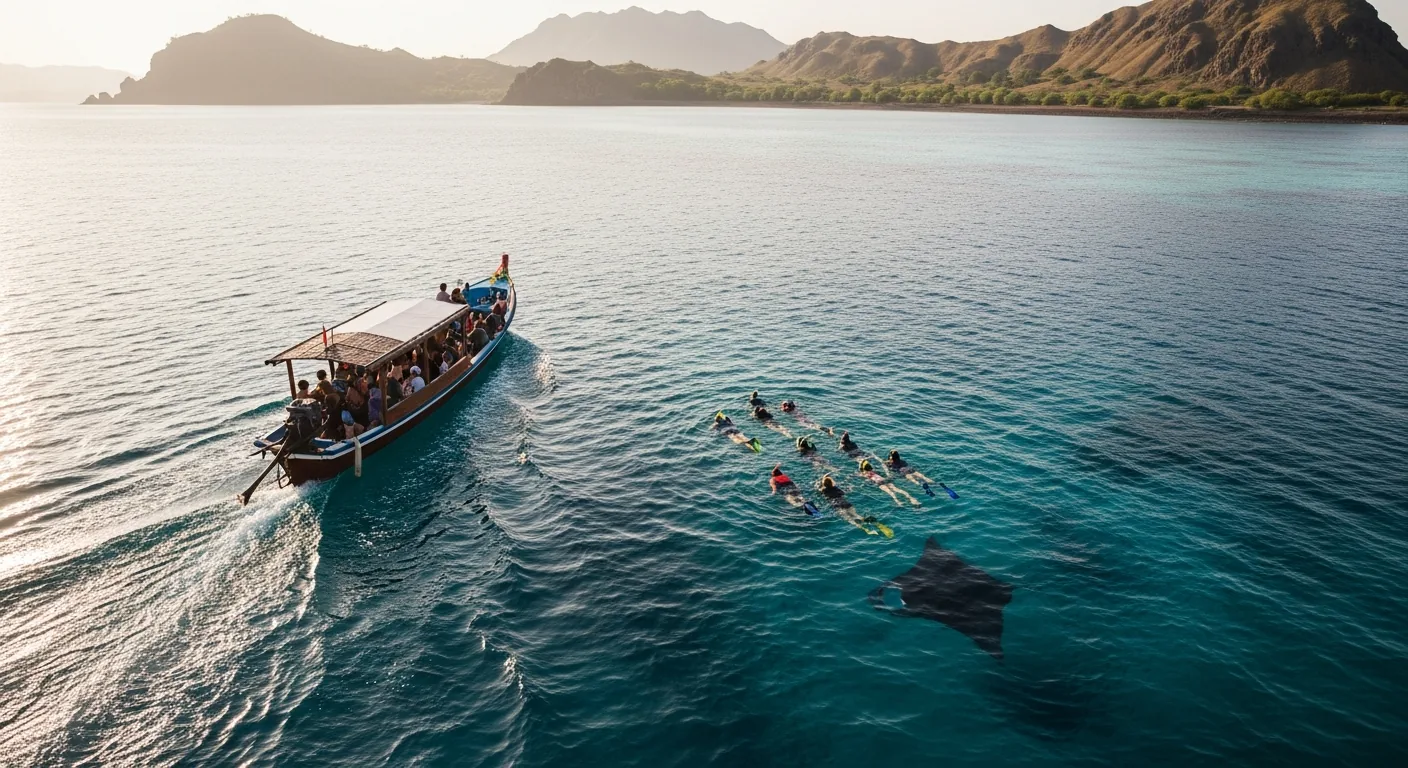
For many travelers, the most efficient and accessible way to see the park’s highlights is a shared Komodo Island day trip via speedboat. These tours, departing Labuan Bajo around 6:00 AM, are designed to cover significant distances quickly, visiting four to six key locations in a single, action-packed day. The classic itinerary almost invariably includes the panoramic hike on Padar Island, a walk with the dragons on Komodo Island, a stop at the iconic Pink Beach (Pantai Merah), and a chance to swim with manta rays at Manta Point. The journey from Labuan Bajo to Padar Island, approximately 30 nautical miles, takes around 90 minutes by speedboat, a fraction of the time required by a phinisi. See also: Contact pricing.
This option represents the budget-to-mid-range entry point for park exploration. Prices generally range from $80 to $150 USD per person. The variation in cost often reflects the quality of the boat, the number of passengers (from 12 to over 40), and the inclusions. A lower-priced tour might use a more basic boat and provide a simple lunch box, while a premium speedboat tour will feature a more comfortable vessel with better seating, a higher-quality lunch, and potentially superior snorkeling gear. As local operator Daniel Susanto notes, “The engine quality is paramount. A boat with four 250-horsepower Suzuki engines provides not just speed but reliability, which is critical when you are that far from shore.” This is an excellent choice for those with limited time who want to experience the park’s most famous sites without the commitment of an overnight stay.
The Private Charter: Tailoring Your Komodo Island Day Trip
For groups, families, or couples seeking autonomy, a private charter offers a substantial upgrade in experience. Chartering your own boat for the day, whether a speedboat or a smaller wooden “slow boat,” removes the constraints of a group tour’s fixed schedule. The primary benefit is flexibility. You can decide to linger at Pink Beach, seek out a more secluded snorkeling spot, or time your Padar Island hike to avoid the peak crowds that arrive between 10:00 AM and noon. This freedom allows for a more personal and unhurried exploration of the park.
The cost for a private day charter varies widely based on the vessel. A basic, open-air wooden boat might be chartered for as little as $400 USD for the day, suitable for up to 8-10 people. However, its slow speed (5-7 knots) limits the achievable itinerary, typically to Rinca Island and a few nearby snorkeling spots. A more popular option is chartering a private speedboat, which offers both speed and comfort. Prices for a private speedboat that can accommodate 6-10 guests range from $800 to $1,500 USD for the day. This price typically includes the boat, captain, crew, fuel, and basic snorkeling equipment, but often excludes meals and park fees. This tier is ideal for travelers who value privacy and a customized Padar Pink Beach tour itinerary over the all-inclusive nature of a shared trip.
The Multi-Day Liveaboard: A Spectrum of Phinisi Experiences
To truly absorb the scale and tranquility of Komodo National Park, a multi-day liveaboard cruise is the superior method. These voyages, typically lasting from two to four nights, allow access to remote corners of the park, facilitate diving at world-renowned sites like Batu Bolong, and offer the profound experience of waking up in a secluded bay. The vessel of choice is the phinisi, a traditional Indonesian two-masted sailing ship. The liveaboard market is sharply stratified, catering to distinct budget and comfort levels.
- Budget Liveaboards: These are the most basic options, often involving shared dorm-style cabins with fans or simple double cabins with shared bathrooms. The experience is communal and adventure-focused. Itineraries are generally fixed, covering the main attractions on a 3-day, 2-night schedule. The cost is highly accessible, ranging from $150 to $250 USD per person, per night. While affordable, it’s vital to vet the operator’s safety record and the vessel’s condition.
- Mid-Range Liveaboards: This category represents the sweet spot for many travelers, offering a significant increase in comfort without reaching the costs of a true luxury charter. These phinisis feature private, air-conditioned cabins with en-suite bathrooms for 10-16 guests. The food is more elaborate, the service more attentive, and the itineraries might include special excursions. Expect to budget between $300 and $500 USD per person, per night for a quality mid-range boat to Komodo.
- Luxury Liveaboards: At the highest echelon are the boutique phinisi yachts, which function as floating five-star hotels. Vessels like the Ayana Lako di’a or the Lamima offer expansive suites, gourmet cuisine prepared by professional chefs, a nearly one-to-one guest-to-crew ratio, and bespoke activities from on-board spa treatments to private dive instruction. “The luxury client isn’t just buying a trip; they are curating an expedition,” says marine tourism consultant Alistair Finch. “They want exclusive access, deep comfort, and flawless service.” A cabin on these premier vessels starts at $700 USD per person, per night and can easily exceed $2,000 USD.
Comparative Analysis: Choosing Your Vessel and Itinerary
The decision between a day trip and a liveaboard, or between budget and luxury, hinges on three factors: time, budget, and travel style. A day trip is an efficient survey, while a liveaboard is a deep immersion. The table below provides a clear comparison to aid in your decision-making process for your Labuan Bajo Komodo tour.
| Transit Option | Typical Cost (per person) | Duration | Best For | Key Feature |
|---|---|---|---|---|
| Shared Speedboat Day Trip | $80 – $150 USD | 10-11 hours | Time-limited travelers, budget-conscious explorers | Efficiency and seeing major highlights quickly |
| Private Day Charter | $600 – $1,500+ (per boat) | 8-10 hours | Families, small groups, photographers | Total itinerary flexibility and privacy |
| Budget Liveaboard | $150 – $250 USD / night | 2-4 nights | Backpackers, solo travelers, social adventurers | Affordable multi-day immersion |
| Mid-Range Liveaboard | $300 – $500 USD / night | 3-7 nights | Couples, divers, travelers seeking comfort | Private en-suite cabins and quality service |
| Luxury Liveaboard | $700 – $2,000+ USD / night | 4-10 nights | Honeymooners, discerning travelers, private groups | Exclusivity, gourmet dining, bespoke service |
Pre-Departure Checklist: What to Know Before You Go
Regardless of your chosen mode of transit, proper preparation is key. The climate in Komodo National Park is arid and hot, and services within the park boundaries are nonexistent. A well-prepared traveler is a comfortable and safe one.
- Cash is Critical: While you can book your tour with a credit card in Labuan Bajo, you will need Indonesian Rupiah (IDR) in cash for all park fees, ranger tips, and any small purchases of drinks or souvenirs from locals on the islands. Assume no ATMs or card facilities exist once you leave the harbor.
- Appropriate Attire: Pack light, quick-drying clothing. For trekking, sturdy walking shoes or hiking sandals are mandatory. The terrain on Padar and Komodo is uneven and exposed. A wide-brimmed hat, sunglasses, and a long-sleeved sun shirt are essential for protection against the intense equatorial sun.
- Marine Essentials: The marine life is a primary draw. Pack high-SPF, reef-safe sunscreen to protect both your skin and the delicate coral ecosystems. A dry bag is invaluable for protecting electronics like cameras and phones from spray on speedboats or during wet landings.
- Booking and Timing: The best time to visit is during the dry season, from April to November. The shoulder months of April-June offer greener landscapes after the rains, while September-November often has the calmest seas and best water visibility. For liveaboards, especially in the mid-range and luxury categories, booking 6-12 months in advance is highly recommended, as the best vessels have limited capacity and fill up quickly.
Plan Your Komodo Transit with Expert Guidance
The journey from Labuan Bajo to Komodo Island is the central pillar of any visit to Flores. Choosing the right boat and itinerary sets the tone for your entire experience in this remarkable UNESCO World Heritage site. From the swift efficiency of a speedboat to the languid grace of a phinisi, there is a vessel to match every timeline and budget. By understanding the true costs, including park fees, and aligning your choice with your personal travel philosophy, you can ensure your exploration of the land of dragons is both seamless and perfectly suited to you.
To navigate these options with professional assistance and to secure a booking on a vetted, reputable vessel, our specialists can provide tailored recommendations. We help clarify the nuances between operators and ensure your transit to Komodo National Park meets your precise expectations.
Brand: Labuan Bajo to Komodo Island Transit
Phone: +6281-1394-14563
Email: [email protected]
Office Address: Jalan Sunset Road No. 88, Kuta, Badung, Bali 80361, Indonesia